The Magic of Compounding: Unlocking Wealth in Mutual Funds
Compounding is often called the "eighth wonder of the world" by investors, and for good reason. It's a powerful concept that allows your investments to grow exponentially over time, especially when applied to instruments like mutual funds. Understanding how compounding works is key to building substantial wealth.
What is Compounding?
In simple terms, compounding is the process of earning returns not only on your initial investment but also on the accumulated interest or returns from previous periods. It's "interest on interest" or "returns on returns."
Imagine you invest ₹10,000 and earn 10% interest in the first year. You'd have ₹11,000. In the second year, if you still earn 10%, you don't just earn it on the original ₹10,000; you earn it on the new ₹11,000 balance. This means you earn ₹1,100 in the second year, bringing your total to ₹12,100. That extra ₹100 is the power of compounding at work.
Compounding in Mutual Funds
Mutual funds are professionally managed investment vehicles that pool money from multiple investors to invest in stocks, bonds, or other securities. When you invest in a mutual fund, the returns generated by the fund (through capital appreciation and dividends) are reinvested back into the fund. This is where compounding truly shines.
Here's how it typically works:
-
Initial Investment: You start by investing a lump sum or through a Systematic Investment Plan (SIP).
-
Returns Generated: The mutual fund's underlying investments generate returns (e.g., stocks go up, bonds pay interest, dividends are received).
-
Reinvestment: These returns are not paid out to you directly (unless you opt for a dividend payout plan, which is generally not ideal for compounding). Instead, they are reinvested by the fund, increasing the Net Asset Value (NAV) of your units or buying you more units.
-
Growth on Growth: In the next period, the returns are calculated on your increased investment value (original investment + reinvested returns). This cycle continues, causing your wealth to grow at an accelerating rate.
Example: SIP and Compounding
Let's illustrate with a SIP (Systematic Investment Plan), a popular way to invest in mutual funds:
-
Monthly SIP: ₹5,000
-
Annual Expected Return: 12% (1% monthly)
-
Investment Duration: 15 years
Without Compounding (Hypothetical Simple Interest): Monthly investment * 12 months * 15 years = ₹5,000 * 12 * 15 = ₹9,00,000 (Total Invested) Simple interest gain (approx) = ₹9,00,000 * 12% * 15 years = ₹16,20,000 Total Value = ₹9,00,000 + ₹16,20,000 = ₹25,20,000 (This is a simplified, often inaccurate, way to think about it)
With Compounding (Actual Calculation): Using a financial calculator (like the one we just built!), a ₹5,000 monthly SIP at 12% annual return for 15 years could result in a maturity value of approximately ₹25,22,960.
-
Total Invested: ₹9,00,000
-
Wealth Gained (Compounding Effect): ₹16,22,960
Notice how the actual wealth gained due to compounding is significantly higher than simple interest. The difference is the "magic" of compounding.
Key Factors Influencing Compounding:
-
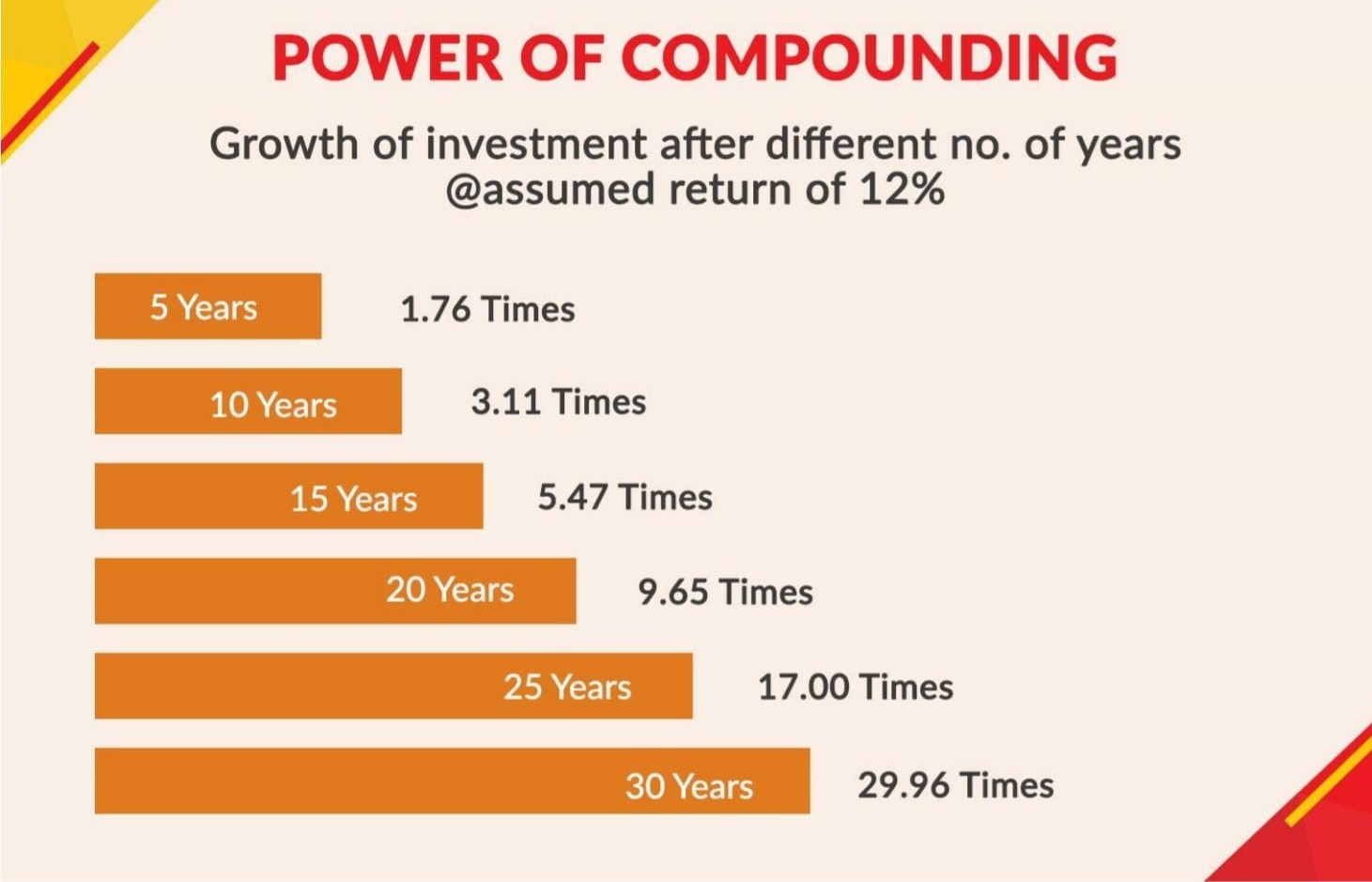
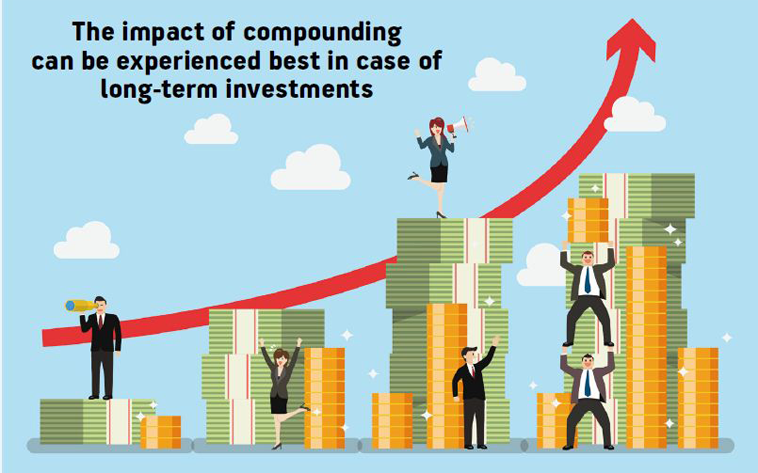
Time: This is the most crucial factor. The longer your money stays invested, the more time it has to compound. Even small amounts invested early can grow into large sums.
-
Rate of Return: A higher rate of return accelerates compounding. However, higher returns often come with higher risk.
-
Investment Amount: Naturally, a larger initial investment or higher regular contributions (like in a SIP) will lead to a larger final corpus, as there's more capital for compounding to work on.
-
Frequency of Compounding: While mutual funds typically compound daily or monthly (based on NAV fluctuations), the stated annual return is what matters most for long-term calculations.
The Power of Starting Early
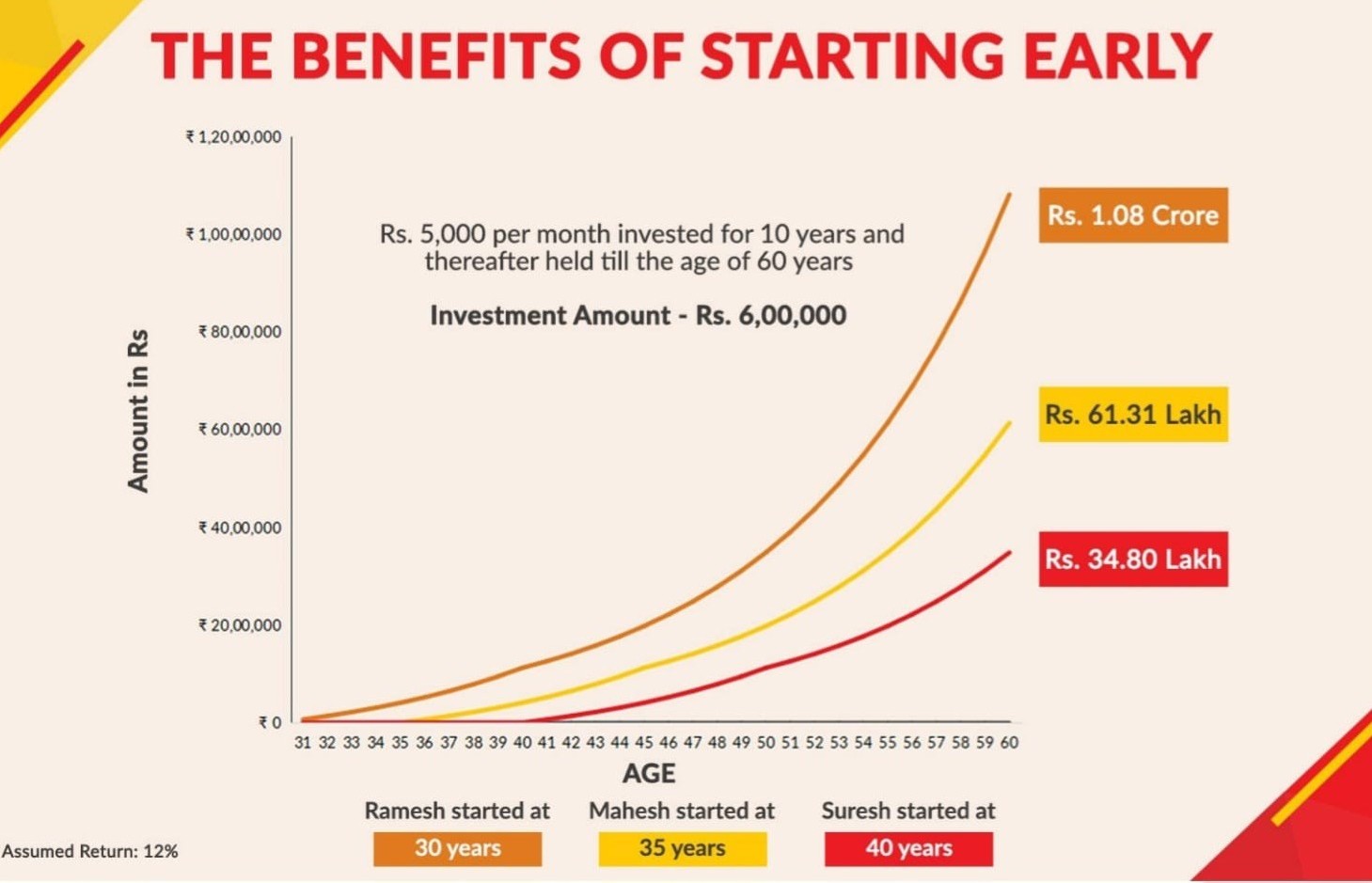
The exponential nature of compounding means that the money you invest in the early years contributes disproportionately to your final wealth. This is why financial advisors always emphasize starting early. Even if you can only invest a small amount initially, the time advantage will allow compounding to work wonders.
Conclusion
Compounding is not a secret, but its impact is often underestimated. By consistently investing in mutual funds and allowing your returns to generate further returns, you can harness this powerful force to achieve your financial goals, whether it's for retirement, a child's education, or any other long-term aspiration.
.png)
.png)
.png)
.png)
.png)